
Food Safety Definitions, Terms, and Tools
Tools
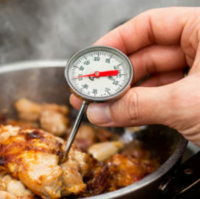
Bimetallic Stem Thermometer
A bimetallic stem thermometer measures food temperature using a metal probe and dial. It is commonly used to check internal temperatures of thick foods like meats. Cooks should insert the stem into the thickest part of the food and allow enough time for the reading to stabilize. These thermometers must be calibrated regularly for accuracy. Temperature is measured from the dimple on the stem to the tip Accurate +- 2°F.
Cleaners
Cleaners remove visible food, dirt, and grease from surfaces. They must be used before sanitizing because sanitizers do not work properly on dirty surfaces. Different cleaners are designed for different types of soil and equipment.
Degreasers
Degreasers are strong cleaners used to break down heavy grease and oils, especially on floors, vents, and cooking equipment. They are not typically used on food-contact surfaces unless approved. Always follow manufacturer instructions for safe use.
Delimers
Delimers remove mineral buildup, such as lime scale, from equipment like dish machines and coffee makers. Mineral deposits can interfere with proper operation and sanitation. Deliming should be done on a regular schedule according to manufacturer guidelines.
Detergents
Detergents are a type of cleaner specifically designed to remove grease and food residues. They are commonly used in warewashing and on food preparation surfaces. Proper rinsing is important to prevent contamination to the sanitizer.
Disinfectants
A substance, or mixture of substances, that destroys or irreversibly inactivates bacteria, fungi, and viruses, but not necessarily bacterial spores.
Food-Contact Surfaces
Food-contact surfaces are any surfaces that directly touch food, such as cutting boards, utensils, plates, and prep tables. These surfaces must be cleaned and sanitized regularly to prevent contamination.
Infrared Thermometer
An infrared thermometer measures surface temperature without touching the food. Because it only measures surface temperature, it should not be used to determine internal cooking temperatures. However, in certain circumstances it can be an effective tool.
Non–Food-Contact Surfaces
Non–food-contact surfaces do not directly touch food but can still contribute to contamination. Examples include floors, walls, equipment exteriors, and handles. These surfaces must be kept clean to support a safe food environment.
Sanitizers
Sanitizers are used after cleaning to reduce microorganisms on food-contact surfaces to safe levels. Common types include chlorine, quaternary ammonium compounds, and iodine. Sanitizers must be mixed to the correct concentration and allowed proper contact time to be effective.
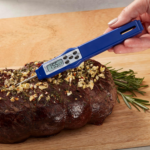
Thermocouple / Thermistor Thermometer
Thermocouple and thermistor thermometers provide fast, accurate temperature readings and are ideal for thin foods. They respond more quickly than dial thermometers and are often used for spot checks during cooking and holding. Proper probe placement and cleaning between uses are essential.
The thermometer that I use is the Taylor Compact Waterproof Digital Thermometer. I like it because it is from Taylor, it is NSF Certified, and it can be recalibrated! This is a big plus when it comes to accurately monitoring temperatures.
Thermometer Hanging
Hanging thermometers are used to monitor ambient air temperature inside refrigerators, freezers, and hot holding units. They help verify that equipment is maintaining safe temperatures. These thermometers should be easy to read and placed in the warmest part of the unit.
Accurate +- 3° F.
Time-Temperature Indicators (TTIs)
Time-temperature indicators show whether food has been exposed to unsafe temperatures over time. These devices are often used during transport or storage to help identify temperature abuse. High-temperature dishwasher indicators confirm that dish machines reach the required sanitizing temperature.
Pathogens
Bacteria
Tiny living organisms, invisible to the naked eye, that can grow on food and surfaces. There are good bacteria, food spoilage bacteria, but in food safety, we focus on harmful bacteria that can cause illness if food isn’t stored, handled, or cooked properly.
Campylobacter
Campylobacter is commonly found in raw or undercooked poultry and unpasteurized milk. It spreads through cross-contamination and improper cooking. Cooks should use separate equipment for raw poultry, clean and sanitize surfaces, and cook poultry to safe internal temperatures.
Clostridium perfringens
Clostridium perfringens grows when cooked foods are held too long in the temperature danger zone. It is often linked to large batches of soups, stews, and gravies. Proper cooling, hot holding, and reheating are essential to prevent this type of foodborne illness.
E. coli (Shiga toxin–producing strains)
Certain strains of E. coli can cause serious illness and are commonly associated with undercooked ground beef, raw milk, and contaminated produce. Ground meats must be cooked thoroughly, and produce should be washed before use. Preventing cross-contamination and following proper sanitation practices are critical for cooks.
Fungi
Fungi includes molds, yeasts, and mushrooms. While some fungi are useful—like edible mushrooms or baking yeast—others can spoil food or produce harmful toxins.
Hepatitis A
Hepatitis A is a virus spread through contaminated food, water, or hands. It is often linked to poor personal hygiene and sick food handlers. Cooking does not always destroy the virus, so proper handwashing and excluding ill employees from food handling are critical prevention measures.
Histamine (Scombroid Poisoning)
Histamine forms when certain fish, such as tuna and mackerel, are not kept properly refrigerated. Once histamine develops, cooking does not make the food safe. Strict temperature control from delivery through service is the only prevention method.
Listeria monocytogenes
Listeria is especially dangerous for pregnant people, older adults, and those with weakened immune systems. It is commonly found in ready-to-eat foods such as deli meats and soft cheeses. Unlike most bacteria, Listeria can grow in the refrigerator, making proper cleaning, storage, and date marking essential for food safety.
Norovirus
Norovirus is the leading cause of foodborne illness outbreaks and spreads easily through contaminated hands, surfaces, and ready-to-eat foods. It is not usually destroyed by cooking. Strict handwashing, cleaning and sanitizing surfaces, and excluding sick food workers are the most effective prevention steps.
Parasites
Parasites are commonly linked to raw or undercooked seafood, meat, and contaminated produce or water. Examples include Anisakis, Trichinella, and Cyclospora. Proper cooking and approved freezing methods destroy parasites, making temperature control and supplier verification essential for cooks.
Salmonella
Salmonella is one of the most common causes of foodborne illness. It is often linked to raw or undercooked poultry, eggs, meat, and unwashed produce. It spreads easily through cross-contamination, so cooks must wash hands, clean surfaces, and keep raw foods separate. Proper cooking and temperature control are the most effective ways to prevent illness.
Staphylococcus aureus
Staphylococcus aureus is commonly found on human skin and in noses. It can contaminate foods that are handled after cooking and left at unsafe temperatures. The toxins it produces are not destroyed by reheating. Limiting bare-hand contact and maintaining proper hot and cold holding temperatures are key controls.
Vibrio species
Vibrio bacteria naturally occur in marine environments and are commonly associated with raw or undercooked seafood, especially oysters. Cooking seafood thoroughly greatly reduces the risk. High-risk individuals should avoid raw shellfish.
Viruses
Microscopic agents found in feces that can cause illness but do not grow in food. Instead, they spread when contaminated food or surfaces transfer the virus to a person, often through poor hygiene.
Other Important Terms
Active Managerial Control
Means the purposeful incorporation of specific actions or procedures by industry management into the operation of their business to attain control
over foodborne illness RISK factors. It embodies a preventive rather than reactive approach to food safety through a continuous system of monitoring and verification.
Adulteration
Food that is contaminated either intentionally, from chemicals, misrepresented, or produced in insanitary conditions. A full definition can be found in the Federal Food, Drug, and Cosmetic Act, § 402.
Contamination
Food that has been touched by pathogens, chemicals, or physical items.
Center for Disease Control and Prevention
CDC as it is often referred to provides data about outbreaks and pathogen information. https://www.cdc.gov/
Code of Federal Regulations
Often the FDA food code references the CFR. CFR has detailed information about chemicals, materials used in construction of tools and equipment, and other technical information.
Excluded
Used when referring to employee illness. An excluded person would be removed from the premises.
Federal Drug Administration
FDA – writes the model food code and unless inspected by the USDA, inspects food processors, distributors, and shippers that take food across state lines. The Food Protection Manager exam you will take will be based on the FDA food code. https://www.fda.gov/
Food Handler or Food Employee
an individual working with exposed food, food equipment or utensils, or food-contact surfaces.
Food Safety Management System
Means a specific set of actions taken by the employee to prevent the occurrence of foodborne illness risk factors based on the type of operation, type of food preparation, and foods prepared within
the food establishment. A food safety management system includes written procedures, training plans, and monitoring records to control specific operational steps in a food establishment that contribute to foodborne illness.
Hazard Analysis Critical Control Point
HACCP – pronounced Ha-sup. a written document that delineates the formal procedures for following the hazard analysis and critical control point principles developed by the National Advisory Committee on microbiological criteria for foods. You can learn more about HACCP here
Hard Water
Hard water is water containing high concentrations of dissolved minerals, primarily calcium and magnesium, picked up as it filters through deposits like limestone or gypsum.
Highly susceptible population
persons who are more likely than other people in the general population to experience foodborne disease because they are:
(1) immunocompromised; preschool-age children, or older adults; and
(2) Obtaining food at a facility that provides services such as custodial care, health care, or assisted living, such as a child or adult day care center, kidney dialysis center, hospital, or nursing home, or nutritional or socialization services such as a senior center.
Leafy Greens
Fresh leafy greens whose leaves have been cut, shredded, sliced, chopped, or torn. The term “leafy greens” includes iceberg lettuce, romaine lettuce, leaf lettuce, butter lettuce, baby leaf lettuce (i.e., immature lettuce or leafy greens), escarole, endive, spring mix, spinach, cabbage, kale, arugula, and chard. The term “leafy greens” does not include herbs such as cilantro or parsley.
Potable Water
Safe, clean, drinkable water. Even if a product contains safe water, like soda, that does not classify as potable water.
Ready to Eat Foods
RTE – Food that is safe to eat as it is, without any further cooking or preparation needed to make it safe.
Examples include: cooked foods, deli meats, washed fresh fruits and vegetables, baked goods, and foods that will only be reheated for taste, not safety. RTE Food does not include commercially packaged food that bears a manufacturer’s cooking instructions.
Reduced Oxygen Packaged Food
Food that has been sealed in a way that removes a significant amount of oxygen. Often called vacuum sealing. Removing oxygen from certain foods can be extremely dangerous
Safety Data Sheet
A Safety Data Sheet (SDS), formerly known as a Material Safety Data Sheet (MSDS), is a comprehensive 16-section document mandated by OSHA’s Hazard Communication Standard that provides detailed information about a hazardous substance. It outlines chemical properties, health hazards, safe handling, storage, and emergency procedures.
Temperature Control for Safety
Certain foods require temperature control, hot or cold, to control the growth of bacteria. Understanding the conditions for bacterial growth is a key concept in providing safe food.
United States Department of Agriculture
The USDA Food Safety and Inspection Service (FSIS) regulates meat, poultry, and specific egg products to ensure safety and proper labeling. Key items include beef, pork, lamb, chicken, turkey, and processed egg products (liquid, frozen, or dried). They also oversee catfish and products containing certain percentages of cooked or
raw meat/poultry.
(Disclosure: Some links contained on this page maybe links to another page and as an Amazon Associate I earn from qualifying purchases.)